
Beyond the Roses: Embracing the New Era of Valentine's Day
Valentine’s Day has long been the victim of its own success. For decades, the mere mention of February 14th conjured a narrow, high-pressure aesthetic: overpriced red roses, mass-produced heart-shaped chocolates, and the frantic scramble for a 7:00 PM reservation at a crowded bistro. But as we move through 2026, a cultural shift has taken hold. People are increasingly rejecting the “performance” of romance in favor of authenticity, shared growth, and a broader definition of connection.
The modern Valentine’s Day isn’t about how much you spend; it’s about how intentionally you show up—for your partner, your friends, your community, or yourself. If the traditional script feels stale, it’s time to rewrite it.
1. The Experience Economy: Shared Growth Over Material Gifts
In a world cluttered with “stuff,” the most valuable gift is time and undivided attention. Non-traditional celebrations often pivot toward learning or movement, creating a “memory anchor” that lasts far longer than a bouquet.
The “Discovery” Date: Instead of sitting across from each other at a table, get side-by-side. Book a local pottery-throwing class, a tufting workshop to create a custom rug, or a high-end mixology course. The goal isn’t perfection; it’s the shared vulnerability of being a beginner.
Micro-Adventures: You don’t need a plane ticket to explore. Try “Geocaching” in your own city, visit a niche museum you’ve always passed by, or book a “Mystery Picnic” where you must solve riddles to unlock each component of your meal.
The Skill Swap: For a budget-friendly but deeply personal evening, teach each other a skill. One person leads a 30-minute yoga flow; the other teaches the basics of coding or how to cook a family recipe.
2. Radical Community: Palentine’s, Galentine’s, and Beyond
The “Loneliness Epidemic” of the early 2020s sparked a movement to elevate platonic love to the same status as romantic love. Today, February 14th is a cornerstone for celebrating the “chosen family.”
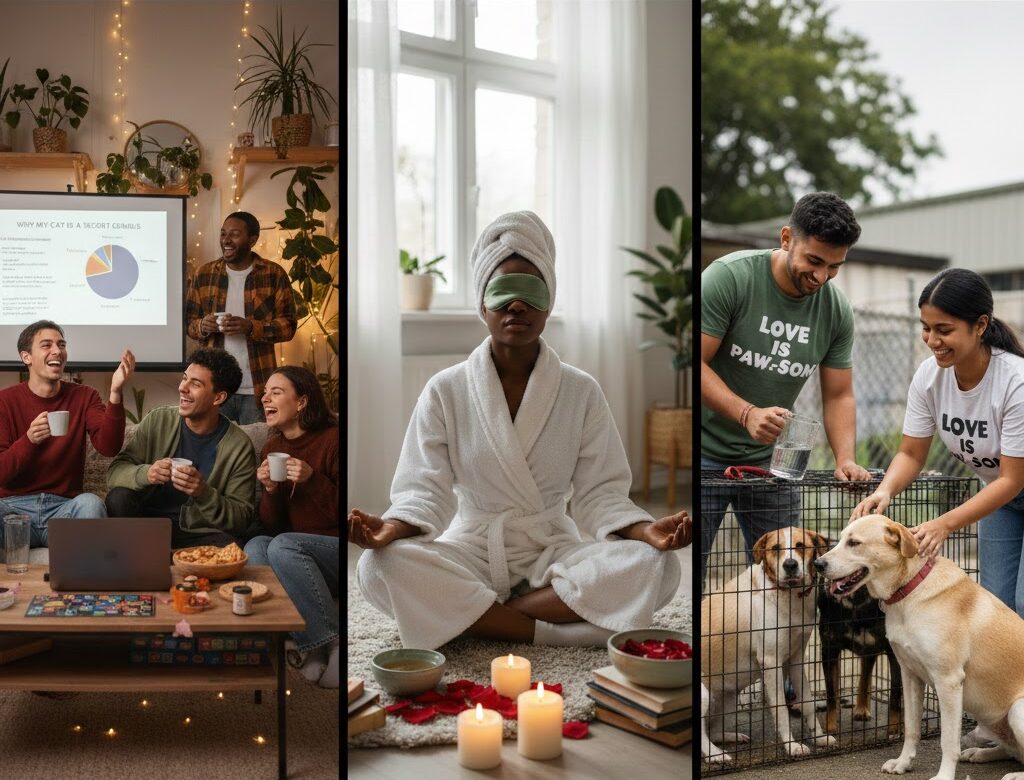
The PowerPoint Night: This has become a staple of 2026 social life. Friends gather to give 5-minute, humorous presentations on topics like “Why My Friends Would Survive a Zombie Apocalypse” or “A Deep Dive into Our Worst Fashion Choices.”
Group “Resets”: Many friend groups are opting for “Spa-lentine’s” nights—hiring a mobile massage therapist or simply doing group face masks while watching a comfort movie.
Intergenerational Connection: Some choose to spend the day visiting older relatives or volunteering at community centers, recognizing that the need for connection is universal and not limited to the young or “coupled up.”
3. The Self-Love Revolution: Reclaiming the Narrative
Perhaps the most significant evolution in Valentine’s Day is the rise of the “Solo-Valentine.” Rather than viewing the day as a reminder of what one might lack, many are using it as a mandatory day of self-advocacy and care.
The “Digital Sunset”: One of the greatest acts of self-love in 2026 is turning off the noise. Celebrating with a digital detox—no social media, no emails—allows for a day of reading, forest bathing, or meditative cooking.
Investment in “Future You”: Some celebrate by taking a day to organize their lives or indulge in a hobby that brings them peace. It’s about being your own best partner and asking, “What do I need right now to feel whole?”
4. Impactful Love: Altruistic Celebrations
For those who find traditional commercialism distasteful, the holiday has become a catalyst for social good. Love, in this context, is a verb that benefits the collective.
Co-Volunteering: Couples and groups are increasingly spending the morning at animal shelters, community gardens, or food banks. Working toward a common goal for the benefit of others often provides a deeper sense of bonding than a fancy dinner ever could.
“Love Your City”: Dedicate an hour to a local park cleanup or support small, minority-owned businesses that may be overlooked during the corporate holiday rush.
5. Nostalgia and the “Anti-Date”
Sometimes, the best way to be non-traditional is to be intentionally uncool.
The “Ugly Date”: Wear your most comfortable sweatpants, order the messiest takeout possible, and play nostalgic board games from your childhood. Removing the pressure to look “perfect” allows for much deeper conversation and genuine laughter.
Legacy Mapping: Spend the evening looking through old photos or writing “future letters” to each other to be opened on Valentine’s Day five years from now. It’s a way to honor the passage of time and the evolution of your bond.
Valentine’s Day in 2026 isn’t a test of your relationship status; it’s a celebration of affinity. Whether you are scaling a rock wall with a partner, laughing at a PowerPoint presentation with friends, or enjoying the silence of your own company, the “right” way to celebrate is the way that makes you feel most connected to the world around you.