Top Microgreens Varieties
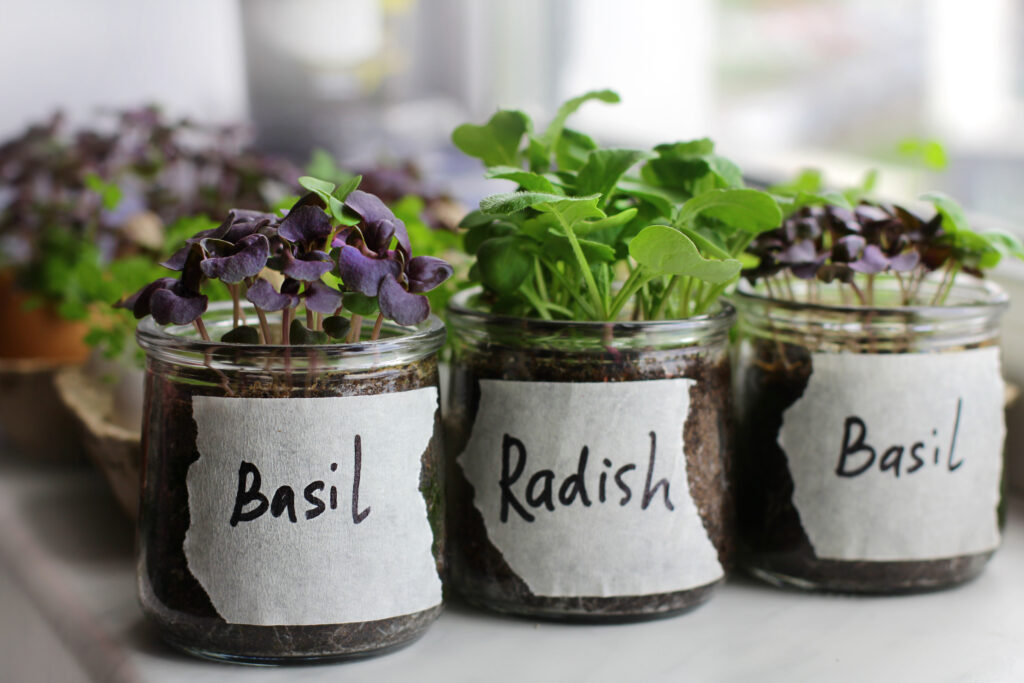
Microgreens sprout quickly in shallow trays, ready in 7-21 days from dense sowing.
Variety | Flavor Profile | Growth Time | Key Nutrients |
|---|
| Pea Shoots | Sweet, pea-like | 10-14 days | Vitamin C, protein |
| Cress | Peppery | 7-10 days | Iron, antioxidants |
| Sunflower | Nutty | 8-12 days | Vitamin E, fats |
| Rocket | Spicy | 7-14 days | Detox support |
| Radish | Crisp, pungent | 6-10 days | Vitamin B, fiber |
| Alfalfa | Mild, fresh | 7-10 days | Chlorophyll, enzymes |
Stagger sowings every few days for steady supply.
Detailed Growing Guide
Use pots or trays with drainage, seed-starting mix, and seeds; optional domes for humidity.
Moisten soil, plant seeds at recommended depths (e.g., 0.5 cm for basil), space 5-10 cm apart. Keep at 18-24°C until germination (7-14 days), then thin to strongest seedlings.
Spread seeds densely on damp soil (1g per 100 cm²), cover briefly, uncover after sprouting. Maintain even moisture and bright, indirect light initially.
Water from below to avoid wetting leaves; aim for moist, not soggy soil. Rotate plants weekly, fertilize lightly monthly with balanced solution. Supplement light with grow lamps if needed.
Harvest herbs at 1/3 height; microgreens at first true leaves using clean scissors.
Troubleshooting Tips
Overwatering causes yellowing—allow topsoil to dry between waterings. Insufficient light leads to legginess; position closer to glass or use reflectors. Combat aphids with neem spray or insecticidal soap; ensure airflow against mold. For fungal issues, reduce humidity and space plants adequately.
Sourcing Supplies
Obtain seeds and pots from garden centers or online retailers specializing in edibles. Look for organic options and starter kits for beginners.
Culinary Applications
Incorporate into salads, smoothies, garnishes, or teas—basil for pesto, cress for sandwiches, pea shoots for stir-fries. Experiment with mixes for varied flavors in everyday meals.
Advanced Techniques
Group plants for microclimates, propagate cuttings in water, or upgrade to shelving for expanded yields. Track growth cycles to optimize light and feeding schedules. In low seasons, insulate pots or use heat mats for consistent germination.